Vinyl or Composite Decking? How to Choose for Vancouver's Rain
They solve two different problems: composite is a better board, vinyl membrane is a waterproof system. Which one your deck needs depends on one question — is there anything under it that must stay dry?

Vancouver gets over 1,100mm of rain in a typical year, so "which decking handles rain best?" is the right question — but it has a sharper answer than most comparisons give. Composite and vinyl aren't two flavours of the same thing. Composite is a better deck board. Vinyl membrane is a waterproofing system that happens to be a floor. Once you see that distinction, choosing between them for your project usually takes about a minute.
The one question that decides it
Is there anything under your deck that has to stay dry?
A room below a roof deck. A patio you use under a second-storey balcony. Storage. The structure of the building itself, on a balcony that's part of the envelope. If yes — the job isn't "pick a nice board," it's "keep water out," and that's what vinyl membrane is engineered for. If nothing below needs protection — a ground-level backyard deck where rain can drip straight through to the earth — then the comparison is really about the board itself, and composite earns its popularity.
How each one handles Vancouver's wet season
**Vinyl membrane (we install Duradek) is fully waterproof, not water-resistant.** Sheets are heat-welded at the seams into a continuous surface, detailed up walls and around posts and drains, so water has no path down into the structure. Rain runs across it and off it — the deck below stays bone dry. That's why it's the standard for balconies, roof decks and sundecks over living space across the Lower Mainland.
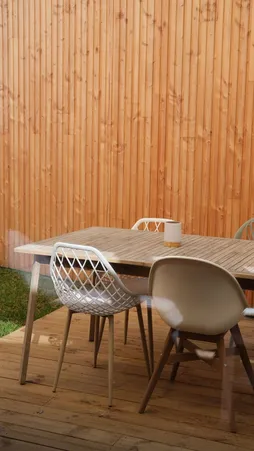
Composite boards shrug off rot, but a composite deck is not waterproof. The boards themselves resist moisture damage far better than wood — no annual staining, no splinters, no rot in the board. But water passes freely between boards, exactly like a wood deck. Composite protects the board; it does nothing for whatever's underneath.
The most common expensive mistake we're called to fix: a beautiful surface installed over a balcony or roof deck with failing or absent waterproofing beneath it. The floor looked perfect while the structure rotted.
Lifespan and maintenance, honestly
- Duradek vinyl membrane: professionally installed, expect 20–30 years of service. Maintenance is a wash-down; there's nothing to stain or seal. Duradek has been manufactured since 1974 and carries a transferable warranty — a real asset at resale. We're trained Duradek applicators, which matters because membrane performance is overwhelmingly about installation quality: the welds, the details at doors and drains, the slopes.
- Composite: quality boards run 25+ years. Maintenance is soap-and-water cleaning — in our shaded, mossy climate, expect to wash any surface (composite included) so algae doesn't make it slippery. No material is "ignore it" in coastal BC; composite is simply "clean it instead of refinish it."
Cost, framed correctly
Per square foot of surface, the two are often closer than people expect. The framing error is comparing them on the same deck: on a project over living space, the honest comparison is vinyl membrane versus composite plus a separate waterproofing system underneath — and once you're paying for waterproofing anyway, the membrane that IS the floor usually wins on both cost and reliability, because one system means one set of details that can be done right.
On a ground-level deck, vinyl's waterproofing is solving a problem you don't have, and composite's board quality is the better spend.
The quick decision guide
- Balcony, roof deck, sundeck over rooms, or any deck where the space below matters → vinyl membrane. Waterproofing is the job; hire it done as a system.
- Ground-level or low backyard deck, nothing beneath to protect → composite for low maintenance, cedar if you love wood and will maintain it, pressure-treated for budget.
- Multi-unit and strata buildings → almost always membrane territory; the balcony is part of the building envelope, and the stakes below it are someone's ceiling.
- Not sure which situation you're in → that's precisely what a site assessment answers, and ours are free.
Two materials, one standard
We install both — composite decks across Metro Vancouver's backyards, and Duradek membranes on its balconies and roof decks — and back both with our 5-year workmanship warranty. The right answer isn't a brand loyalty; it's matching the system to what your deck has to protect.
Daniel
Owner, PCC Decking