Covered Decks for Vancouver's Rain: Pergola, Louvred Roof or Solid Cover?
A roof over your deck turns a four-month space into a ten-month one. How the three cover types handle rain, snow load and permits in Metro Vancouver — plus the heating, lighting and layout details that decide whether an outdoor room actually gets used.

The difference between a deck you use in July and a deck you use in October, March and most of the evenings in between is a roof. In a region that records measurable rain on more than 160 days in a typical year, "outdoor living" is mostly a question of cover — and the three common ways to get it behave very differently in our climate. This is how to choose between a pergola, a louvred roof and a solid cover, what each means for permits and snow load, and the details that turn a covered deck into a room people gravitate to.
Why covered decks are the upgrade that pays off here
Vancouver's problem is not cold; it's wet. Shoulder-season temperatures are perfectly pleasant under shelter, and a covered deck with a heater is usable on a dry November evening or a drizzly April morning when the uncovered one is a puddle. Cover also protects the deck itself — less standing water means less algae, slower wear and fewer surface problems — and it shelters the door, the barbecue and the furniture you'd otherwise be hauling in and out.
The three ways to cover a deck
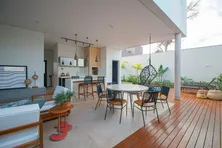
1. Pergola. Posts and beams with open rafters or slats. It gives shade, structure for lights and climbing plants, and a strong sense of an outdoor room — but open slats do not shed rain, and a retractable fabric canopy handles only light showers if it's sloped properly. In Metro Vancouver a traditional pergola is a summer structure with a beautiful silhouette the rest of the year. Wood pergolas are the most affordable cover to build; aluminum versions with a retractable canopy sit a tier above.
2. Louvred roof. An aluminum pergola whose roof is made of rotating louvres: open them for sun and air, close them and the interlocking blades form a weather-tight surface with built-in gutters that drain through the posts. Motorized, often with rain sensors, and engineered for wind and a rated snow load (confirm the rating for your municipality). It's the most flexible cover for our climate, and typically the most expensive of the three.
3. Solid cover. A fixed roof — a framed rafter roof tied into the house, an insulated aluminum panel system, or a glass roof on an aluminum frame. Solid covers shed rain and snow all year without anyone touching a switch, can carry lights, fans and heaters, and can be finished to match the house. Glass keeps the light and the view; a solid roof keeps the most weather out and, done well, extends the architecture of the home. Insulated panel systems are mid-priced; glass covers are at the top of the market.
A rule of thumb: if you want year-round use, you're choosing between a louvred roof and a solid cover; the pergola is for shade and structure, not shelter.
Permits, structure and snow
Any roof over a deck — attached or freestanding — is a structure, and in Metro Vancouver municipalities that means a building permit, drawings, and engineering for snow and wind loads. Three things to know before you fall in love with a picture:
- An attached cover ties into your house. Where and how it meets the wall and the roofline is a flashing and structural detail that decides whether your new roof leaks into your old one.
- Covered area can count toward zoning limits. Some municipalities treat a roofed deck as site coverage or floor area in a way an open deck isn't; a larger cover can bump against those limits on a small lot. Your municipality's rules decide; we check before we draw.
- Strata buildings need council approval and usually engineered drawings before the city ever sees the file.
Snow is the load that matters. It doesn't fall often in the Lower Mainland, but when it does it's wet and heavy, and an under-built cover that comes down in January is a bad way to find out — insurers ask pointed questions about permits and engineering afterwards. Engineered systems and permitted drawings are not red tape here; they're the difference between a roof and a liability.
Making it a room, not a shelter
A cover gets people outside; the details keep them there.
- Heat. Ceiling- or wall-mounted electric infrared heaters warm people rather than air and suit covered decks well; gas heaters need clearances a solid roof may not allow. Plan the circuit during construction, not after.
- Light. Layers: soft overhead, task light at the grill and table, and something low on the stairs. Dimmable.
- Wind. Covers keep rain off but not out. A glass windbreak or a slatted privacy screen on the weather side turns a damp corner into a dry one — watch which direction your rain actually arrives from.
- Air. A ceiling fan under a solid cover moves summer air and discourages mosquitoes.
- Dry below. On a second-storey covered deck with usable space underneath, a vinyl membrane floor keeps whatever is below it dry regardless of what blows in.
- Fire and food. Outdoor kitchens, barbecues and fireplaces under a roof are a clearance and ventilation exercise — exactly the kind of thing to design in from the start.
- Hot tubs. Heavy. A tub on an elevated deck is a structural design item, cover or not.
What we build
Our outdoor living work runs from covered decks and pergolas through outdoor kitchens, fireplaces, hot tub surrounds and full outdoor rooms, designed and built as one scope so the roof, the structure, the membrane and the railings are detailed together rather than by three trades who've never met. Larger projects can be spread over time with our financing partner. Either way it starts with a site visit, and ours are free.
Quick answers
Do I need a permit for a covered deck or pergola in Metro Vancouver? For a roofed structure attached to the house, yes in every municipality we work in; most freestanding covered structures need one too. Confirm with your city before building — we do this as part of the design.
What's the best deck cover for rain? For year-round use, a louvred roof or a solid cover. A pergola provides shade and structure, not rain protection.
Does a covered deck need snow-load engineering? Yes. Lower Mainland snow is infrequent but wet and heavy; engineered, permitted covers are designed for it.
Daniel
Owner, PCC Decking